Why People Attended the 3rd Carbon Accounting in Agricultural Supply Chains Summit?
With the finalization of the GHG Protocol Land Sector and Removals Standard, rising expectations from SBTi, and increased attention on land-based claims, agrifood companies were under pressure to move beyond pilots and ambition toward defensible, auditable execution. The 3rd Carbon Accounting in Agricultural Supply Chains Summit was the only industry-focused forum dedicated to the "how" of implementation. Bringing together farmers, multi-national consumer good organizations, researchers, NGOs, and solution providers, the summit delivered practical guidance on aligning project and inventory accounting to ensure carbon claims could withstand regulatory and investor scrutiny. Attendees gained the clarity, confidence, and frameworks needed to turn agricultural decarbonization into measurable progress, resilient supply chains, and credible Scope 3 outcomes.

What Happened in 2026?
Implemented the Final Land Sector & Removals Standard
Attendees moved from interpretation to execution through practical guidance on land management emissions, removals, and claim integrity, grounded in real-world supply chain constraints.
Designed Traceability & Chain-of-Custody Systems
Attendees learned how leading organizations were improving data confidence and audit readiness without increasing supplier burden.
Responded to 45Z & Carbon Intensity Market Signals
Attendees gained a clear understanding of how carbon intensity frameworks diverged from Scope 3 accounting and how these incentives were reshaping agricultural markets.
Aligned Project & Inventory Accounting
Attendees heard how organizations were avoiding double-counting while translating farm-level data into inventory-ready Scope 3 reporting.
Built Durable Financing Beyond Pay-for-Practice
Attendees explored shared-value, multi-year incentive models that supported farmer retention, long-term adoption, and credible ROI.
Drove Farmer Adoption at Scale
Attendees examined proven engagement strategies that aligned incentives, reduced friction, and built long-term trust with growers while helping organizations meet their corporate climate goals.
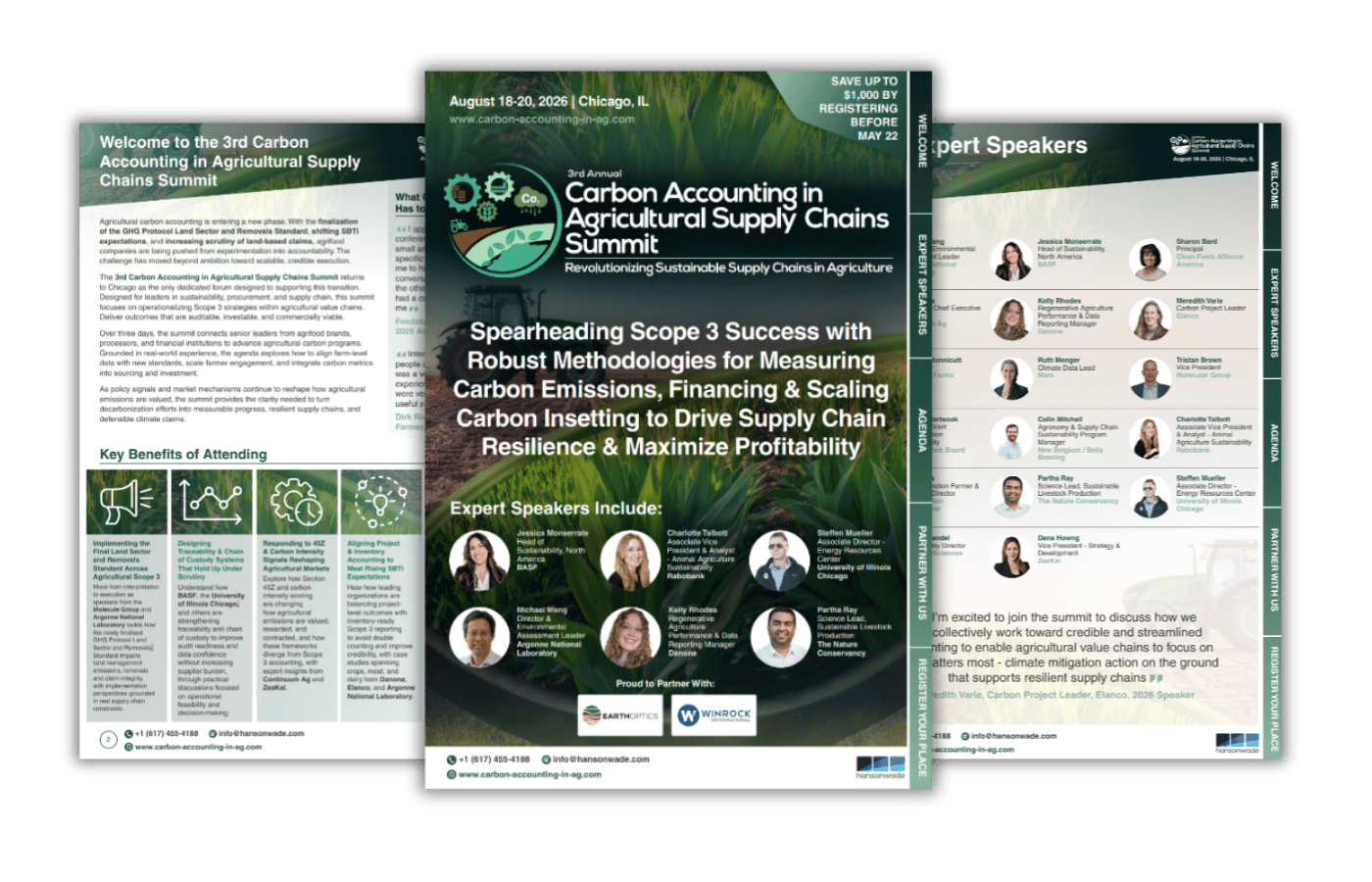
Explore the 2026 Full Program
- 20+ expert speakers across the agricultural value chain
- 2 focused conference days plus pre-conference workshops addressing 45Z and changing standards
- Implementation-led case studies from CPGs, producers, and standards leaders
- Interactive roundtables and a scientific poster session
- Structured in-person networking designed to connect you with peers across the carbon supply chain
Organizations that Attended









Explore the 2026 Full Program
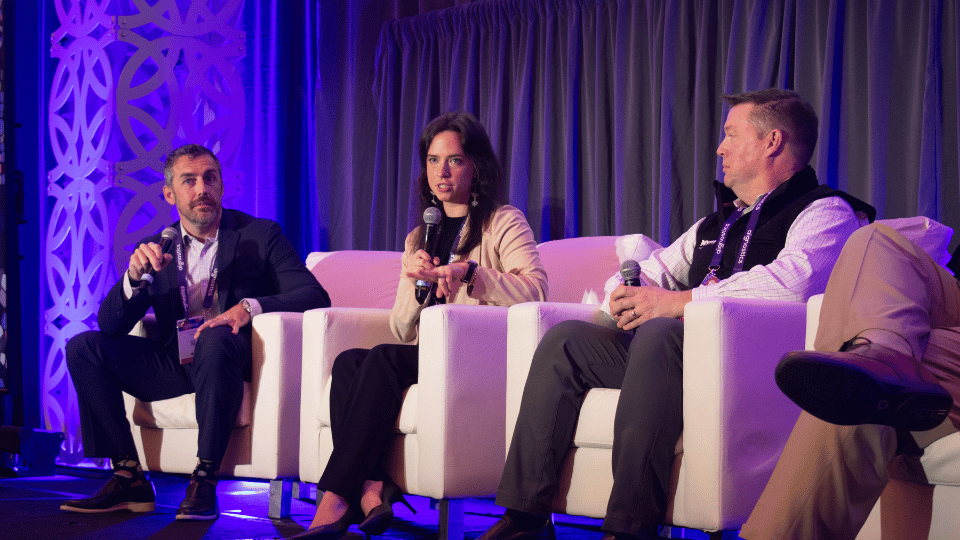
Hear the latest industry breakthroughs and gain exclusive insights during our packed agenda, interactive roundtables, and panel discussions.

Partner With Us
Position yourself alongside other leading solution providers to ensure your brand is at the heart of agriculture deals.

Join Agriculture Experts
Be part of the hottest conversations with like-minded attendees spanning all stages of drug development and make critical connections during our dedicated networking sessions.